A television library is an asset with a maturity date. HBO Max paid a reported sum north of half a billion dollars for exclusive streaming rights to The Big Bang Theory, and five years later the platform has begun manufacturing new episodes around the edges of it. Stuart Fails to Save the Universe, which premiered on 23 July, is what that strategy looks like in practice.
What was bought, and why it needed protecting
When HBO Max launched in the spring of 2020, all 279 episodes of the CBS comedy arrived with it, in a five-year exclusive deal reported to exceed the 500 million dollars Comcast had paid for The Office. TBS kept its cable window through 2028. In the accounting of a streaming service, that library was not entertainment. It was retention.
Catalogue comedy behaves differently from prestige drama. Subscribers do not sign up for it, but they stay for it, because it is what plays in the background of an evening. The problem with a fixed library is that it depreciates quietly. Every year the same 279 episodes are worth slightly less, because the audience that watches them ages and the ones arriving have their own background comedy.
There are two ways to arrest that decline. Buy more library, which is expensive and increasingly scarce. Or extend the one you own, which is what a spin-off is.
The extension ladder
Warner Bros. Television has run this play before with the same property, and the results form a clear ladder:
- Young Sheldon, a prequel around the show's most recognisable character, which ran for seven seasons on network television - Georgie & Mandy's First Marriage, a spin-off of the prequel built around a secondary character from it - Stuart Fails to Save the Universe, the first extension made for streaming rather than broadcast, built around a supporting player from the original
Each rung takes the franchise further from the asset it is protecting, and each costs less to make than the one before. The logic is not creative exhaustion. It is portfolio management. A prequel about the lead needs a lead's budget and a lead's approval. A science-fiction comedy about the comic shop owner needs neither.
The risk that was actually taken
What makes this one worth attention is that it does not behave like a defensive product. Chuck Lorre, Zak Penn and Bill Prady have replaced the multi-camera stage with single-camera photography, removed the laugh track, hired Danny Elfman for the theme and Joseph LoDuca for the score, and set the whole thing in a collapsing multiverse where Kevin Sussman's Stuart travels between worlds repairing damage he caused.
That is a genre change, and genre changes break the retention logic. The viewer who keeps The Big Bang Theory on in the evening is not obviously the viewer who wants ten weeks of apocalyptic science fiction with action sequences. The show is asking a familiar audience to follow it somewhere unfamiliar, which is the opposite of what a catalogue defence normally does.
The release pattern hedges that bet. Ten episodes weekly through 24 September keeps the title in circulation for two months rather than a weekend, which suits a show whose value lies in reminding subscribers that the library exists.
Reading the numbers
The critical position is mid-table. Rotten Tomatoes shows 76 per cent from 38 reviews with a 6.9 average, and Metacritic 68 out of 100 from 18 critics. For a franchise extension those figures do the job: high enough to avoid embarrassment, not high enough to create an event.
The negative reviews are the informative ones. The Hollywood Reporter's Angie Han found the invented worlds thin and the treatment of the female characters worse, describing the result as cynical rather than inventive. RogerEbert.com judged that a good idea had been squandered. Both criticisms point at the same underlying condition: a series that exists to defend an asset will always be tempted to spend its budget on recognition rather than on writing.
What to watch for
The number that matters will not be published. It is whether the spin-off moves viewing of the original library, and only HBO Max can see that. For anyone tracking how streaming platforms manage ageing catalogue, three signals are worth following over the next two months.
Whether the weekly schedule holds attention through September, or the audience collapses after the premiere. Whether the series earns a second season, which would indicate the retention maths worked. And whether the next extension moves further out again, towards characters with even less brand equity, which would tell you the strategy is now the plan rather than an experiment.
A library is only an asset while somebody is still adding to it. This is what adding to it costs.
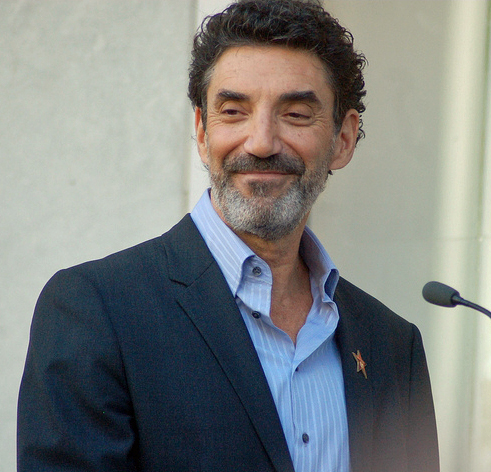
Photograph: Chuck Lorre by Angela George, CC BY-SA 3.0, via Wikimedia Commons.